
If you manage a thrift store, you already know the feeling of walking into the backroom on a Monday morning. The weekend donation drive was a massive success! But now you’re staring at a mountain of unsorted bags and boxes.
Your team is working hard, and you have a solid sorting process in place. But there’s a persistent roadblock sitting between those generous donations and your sales floor: the production/tagging station.
Unlike traditional retail, where a shipment of 1,000 identical t-shirts needs just one SKU, thrift retail is a 1-of-1 business. There are no packing slips, no purchase orders, no data….Every single item that comes through your door is unique, requiring its own evaluation and categorization. When your staff has to navigate clunky interfaces, reference a decade-old pricing binder, or stop to swap out physical colored tag rolls just to process a single item, that is a classic backroom bottleneck. It does more than slow production. It can lead to inconsistent pricing, missed revenue, limited reporting, and gaps in the data your organization needs to make better decisions.
Optimizing Your Backroom Production Process, Not Changing It.
You’ve spent years refining your backroom workflow. Your team knows how to sort and evaluate incoming goods to maximize floor space and community impact. Every thrift operation has its own DNA; maybe your strategy relies on flat-rate clothing categories, a good/better/best tier system, or strict weekly color rotations to keep inventory fresh and drive your discount promotions.
The problem usually isn’t the workflow you’ve built. The problem is what happens to your team’s momentum when they are producing hundreds of unique goods.
Think about a volunteer pricing a bin of men’s shirts. If your software resets to the main menu after every tag prints, they have to click through multiple screens just to price the next shirt in the same bin. Those extra clicks add up, interrupt their rhythm, and slow production.
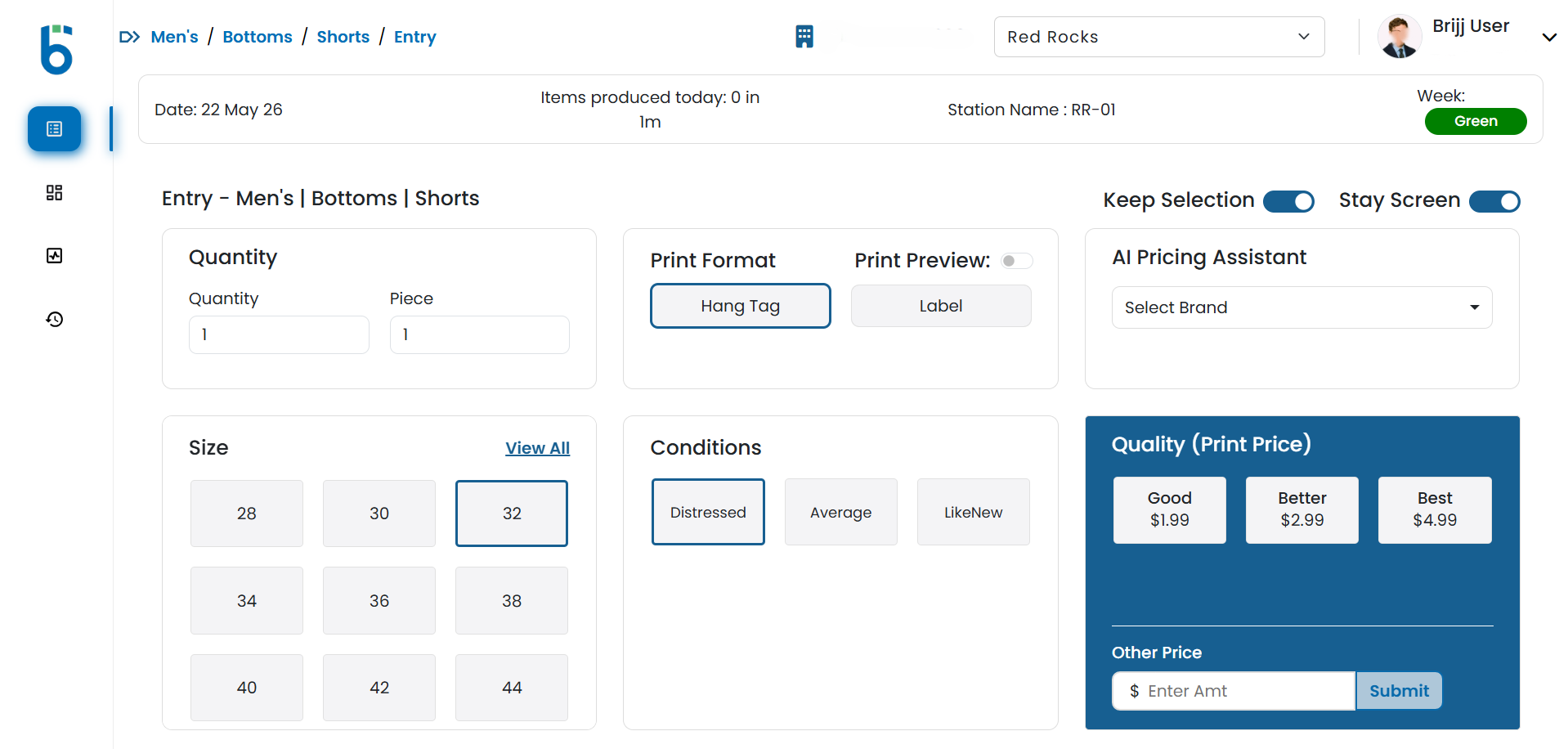
We also know exactly what happens when you introduce software to someone who has been hand tagging donations for 20 years. “This is going to slow me down.”
TPM was designed to feel familiar from the very first item. Volunteers pick up the next item, adjust the price if needed, print the tag, and keep moving. No unnecessary navigation. No broken rhythm. Just a faster, more efficient version of the workflow they already know.
The Proof is in the Production
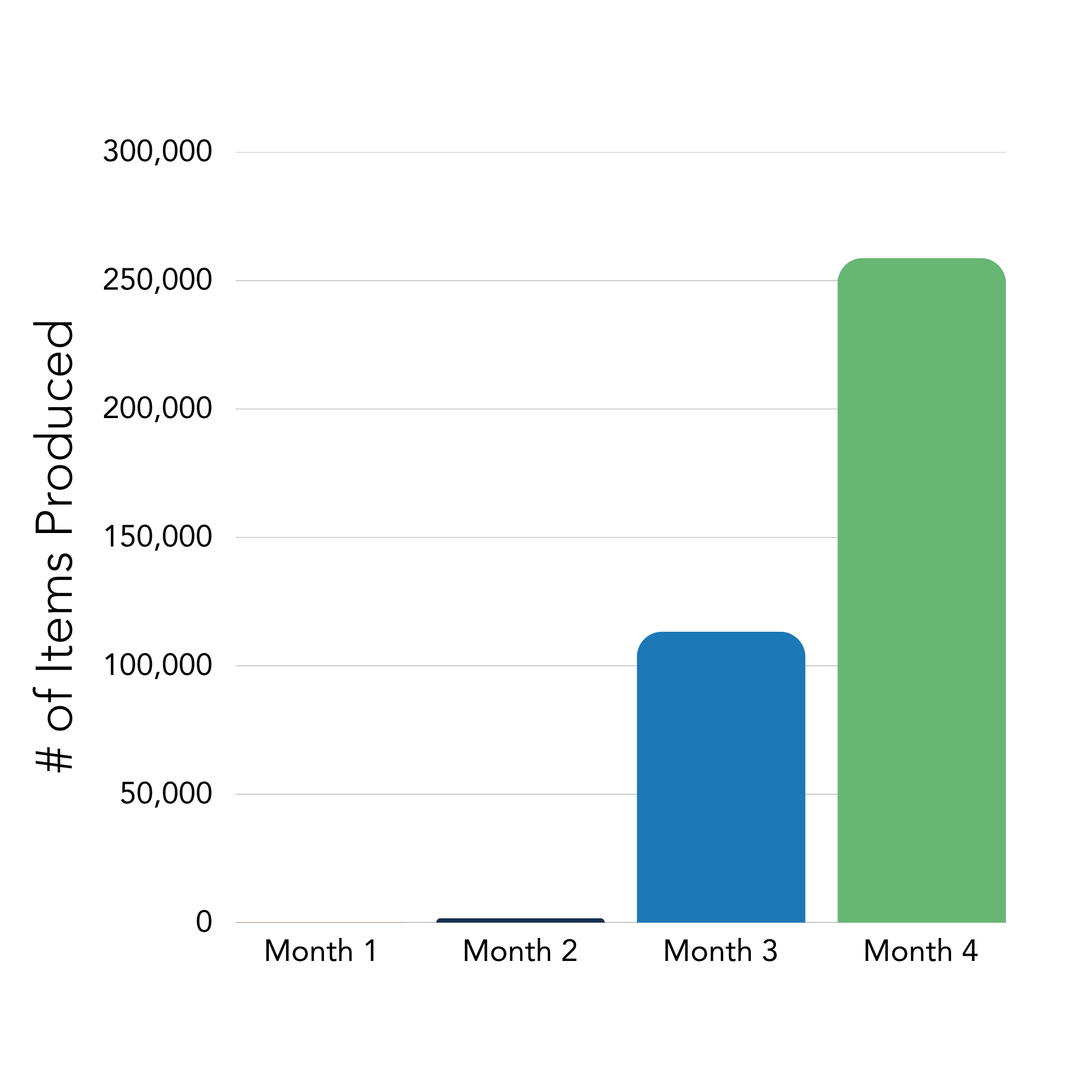
What happens when you finally remove the friction and prioritize your backroom’s momentum? The results speak for themselves. In the last four months alone, one of our multi-location thrift client’s processing volume exploded as their team found their rhythm.
Month 1: 119 items processed
Month 2: 1,704 items processed
Month 3: 113,298 items processed
Month 4: 258,746 items processed!
That kind of massive jump is a direct result of getting clunky software out of the way so a team can work to their full capacity.
The goal isn’t to teach your backroom a new way to work. It’s to help your backroom do what it already does, only better.
Because TPM’s interface is built around rhythm and simplicity, new volunteers can sit down, learn the system in minutes, and start producing accurately on day one. And since it’s all unified with the Brijjworks Point-of-Sale, every item that rolls off the line is instantly live and trackable.
Your best volunteers shouldn’t have to slow down for software. Your software should keep up with them while giving your organization the data to compete in the modern thrift industry.
Looking for another example of how TPM has made a massive impact for one of our clients?
Check out our latest case study to see how TPM made a multi-location Goodwill in the Southwest 10x more efficient: How a Multi-Location Southwestern Goodwill Improved Donation Processing with Brijjworks Thrift Production Manager