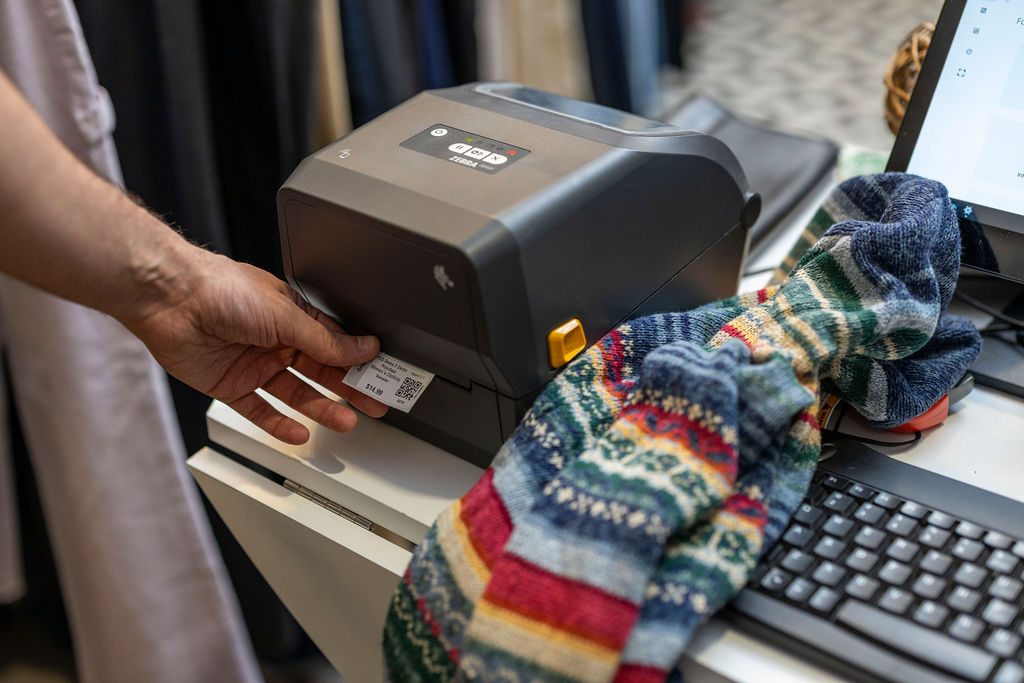
In thrift retail, many operational conversations are dictated by the register: sales reporting, discounts, tender types, average ticket, promotions, loyalty programs, and returns. But increasingly, thrift retailers are taking a different approach and asking:
What visibility do we actually have before inventory ever reaches the sales floor?
That shift matters. The most critical operational decisions in donated goods retail happen long before checkout: pricing, sorting, transfers, seasonal storage, production flow, sell-through timing, managing overloaded Z-racks, tracking inventory inside Gaylords, balancing incoming donation types, and monitoring what ultimately ends up in rag out.
Today, scaling thrift retailers require modern, data-driven platforms like Brijjworks Point of Sale and Brijjworks Thrift Production Manager (TPM) to stay competitive.
Thrift Retail Requires Unique Inventory Management Solutions
Traditional retail systems are built around replenishable inventory and fixed SKU catalogs. Thrift retail operates differently: inventory arrives unpredictably with categories fluctuating constantly, store demand changes week to week with some locations moving furniture quickly while others sell more apparel, and unlike traditional retail – donated goods inventory often does not have a true cost basis attached to it, which creates massive tracking challenges for standard retail inventory systems.
This difference between traditional and thrift retailers does not mean that thrift retailers lack operational discipline. In many cases, the opposite is true. Most large thrift retailers have developed highly refined operational workflows over time. But as organizations expand across multiple stores, production centers, and donation streams, visibility becomes harder to maintain consistently.
This fundamental gap in traditional software is exactly why Brijjworks TPM was built — to support and track the unique, unpredictable inventory of donated goods without forcing rigid workflow changes.
Thrift retailers constantly face inventory situations where goods should not immediately hit the sales floor. These situations include: winter jackets arriving in April, holiday items donated in January, peak donation periods overloading processing facilities, filled Z-racks waiting for floor space, and backstock sitting inside Gaylords in the warehouse.
Historically, organizations managed these situations through manual internal processes and team coordination, resulting in little to no visibility. Leaders are left with questions: What inventory is in storage? Which stores are overloaded? Will holding seasonal inventory improve sell-through performance?
The Brijjworks Inventory Management System (IMS) provides the answer. It transforms backstock guesswork into visible, trackable reports, ensuring inventory is managed strategically before it takes up valuable floor space.
Actionable Thrift Production Reporting Furthers the Mission
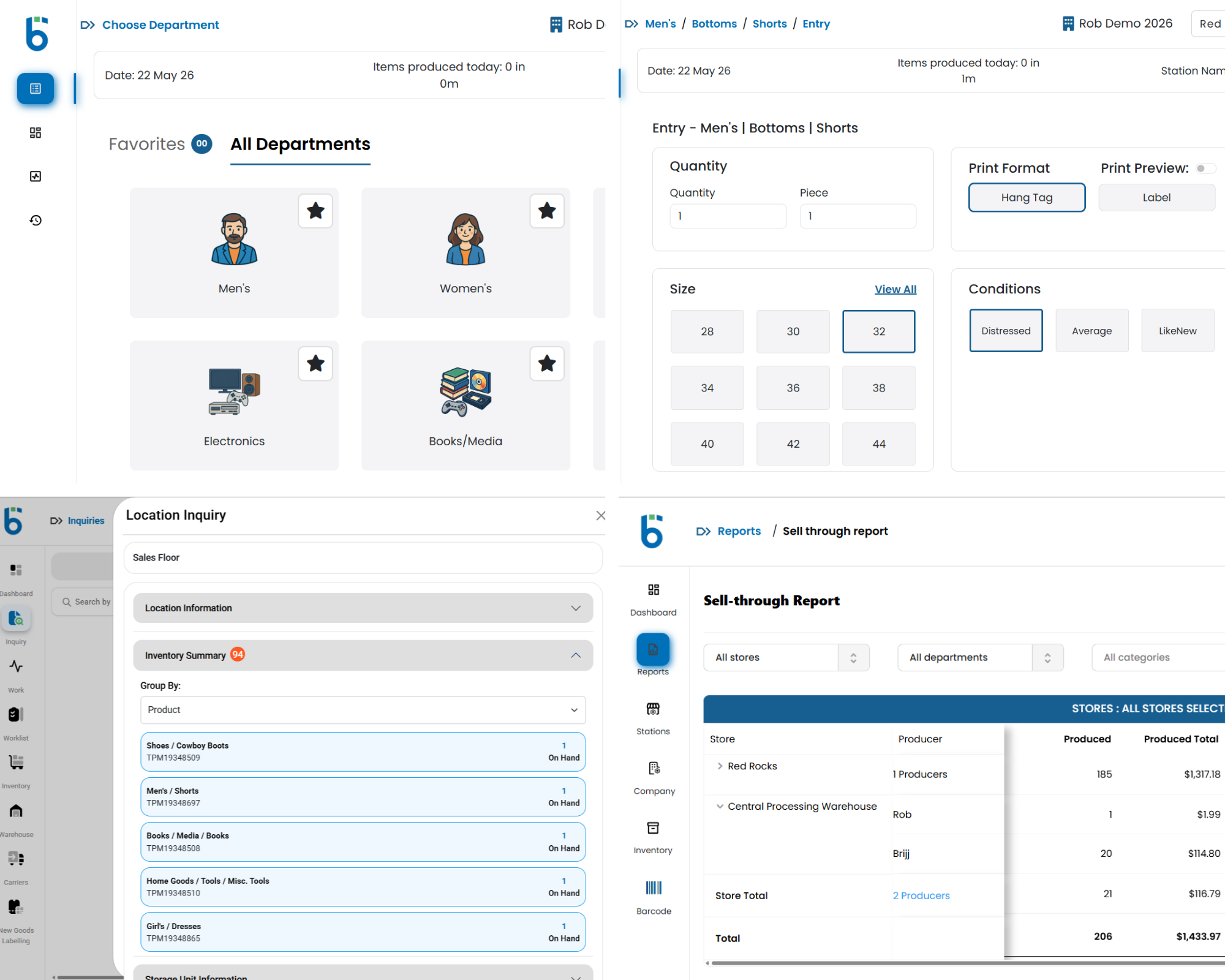
The goal of being able to easily understand production output by department, category performance, pricing consistency, inventory aging, transfer activity between stores, production bottlenecks, sell-through trends, the effectiveness of promotions, and customer engagement tied to loyalty initiatives all in one place isn’t more data for the sake of data, it’s better operational context. By leveraging modern cloud tools and the API capabilities built into Brijjworks TPM and Brijjworks IMS, leadership teams can make informed decisions that ultimately help thrift retailers stay competitive and maximize the impact of their mission.
Ready to transform your production and inventory processes into a high-performance engine? Schedule a demo today to see how Brijjworks TPM and IMS can unify your operations and unlock new levels of efficiency and impact.