Every day, bags, bins, and boxes arrive at your back door. Inside is a mix of clothing, housewares, books, electronics, and everything in between.
But those donations aren’t just inventory. They contain information about what your community is giving, what shoppers are looking for, and where your team can focus its time.
The challenge is turning all of that information into something useful.
Luckily, you don’t need a degree in data science to figure it out.
The Gap Between the Backroom and the Register
In traditional retail, buyers have more control over what comes into the store. In thrift, every donation is a little different. You might receive an influx of winter coats in July or a surplus of vintage glassware over a single weekend.
That unpredictability is part of what makes thrift unique. It’s also why having visibility into what’s happening across your store can be so valuable.
When your production and point-of-sale systems work independently, it’s harder to connect what’s happening in the backroom with what shoppers are actually buying. A category may be selling faster than your team realizes, while other merchandise may be spending more time on the sales floor.
This is where accessible thrift store analytics can help.
When your point-of-sale and production systems are connected, you can start to see patterns that are difficult to spot when that information lives in separate places. Questions that once required a little digging become easier to answer:
- Which categories are selling fastest this week?
- Are certain brands consistently selling for more than your standard pricing?
- Which color-tag items are still on the floor and may be ready for a markdown?
- What types of donations are coming in compared with what shoppers are buying?
The goal isn’t to replace the experience and workflows your team has built over time. It’s to give that experience more information to work with.
Making Data Actionable Without the Headache
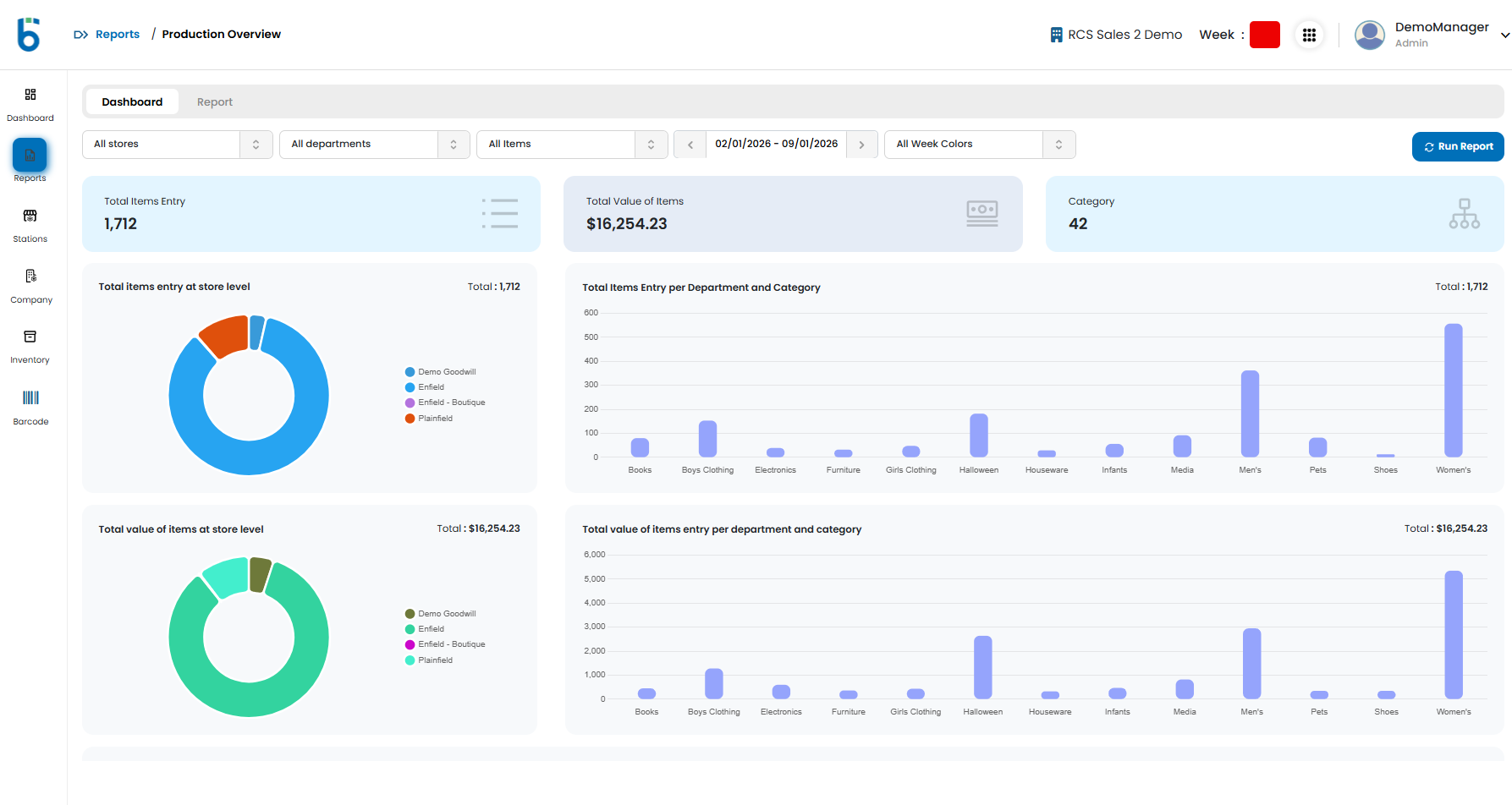
Useful data shouldn’t mean another spreadsheet for your team to maintain. It should show up where your team can actually use it. That’s where connecting the thrift lifecycle becomes especially useful.
A connected thrift store platform can bring donation intake, production, inventory, ecommerce, and point-of-sale information together, giving your team a clearer picture of how those pieces influence one another.
That’s the approach behind Brijjworks. Rather than treating each part of the thrift lifecycle as its own system, the platform connects the work from donation intake through the sale. The result is more visibility into what’s coming in, what’s being produced, where goods are being sold, and what’s actually moving.
And that visibility can extend beyond the sales floor to help teams make better use of the inventory they already have.
It’s not about changing everything your team does. It’s about making that information easier to use.
Turning Insight Into Impact
Every donation represents an opportunity. The better you understand what is coming in and how it performs, the more informed your decisions can become.
For donors, that means knowing their contributions are being put to good use. For shoppers, it means a better chance of finding the things they’re looking for. For your team, it means having useful information to support the decisions they’re already making every day.
And ultimately, getting more value from the goods your community donates means more value can make its way back to the mission.
That’s the bigger opportunity behind better data. It’s not about changing everything your team does or turning thrift into traditional retail. It’s about connecting the information you already have so it can work harder for you.
Your inventory has a story to tell. The right data can help you listen—and turn those insights into more value for your mission.