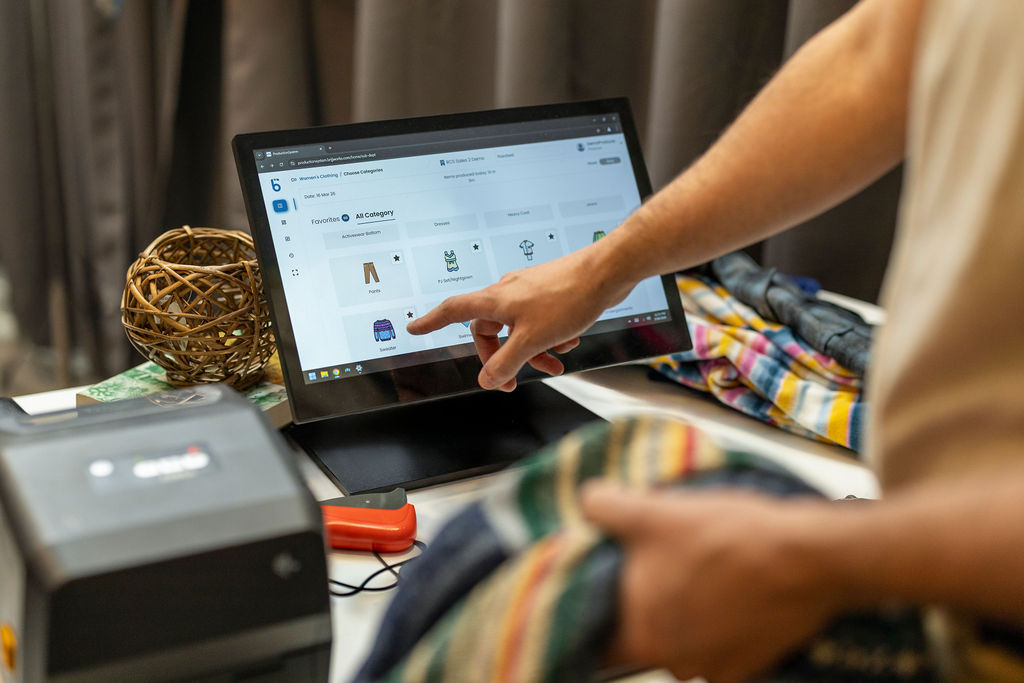
Thrift retail is supposed to be dynamic. It should be a high-velocity environment where unique finds meet eager buyers. High-volume? Yes. Communal? Absolutely. Mission-driven? Always. But thrift is not supposed to be a constant battle against your own data.
For years, Donated Goods Retail (DGR) has been treated like a subset of traditional retail. The industry has been forced to “make do” with systems designed for standard retail stores that sell a hundred units of the same blue shirt. But thrift retail software is different. In thrift, every item is a unique SKU. Every donation is a complex intake process. Every sale is a victory for sustainability and the mission.
When your technology doesn’t understand the nuances of the “one-of-a-kind” workflow, the friction mounts. Retail gets harder when the system moves slower than the people sorting at the back dock.
Why Legacy POS Systems Fail the Thrift Retail Workflow
The average point-of-sale system was built for replenishment. It assumes that when you sell a jacket, you’ll receive ten more jackets with the same barcode next Tuesday. In thrift, the “supply chain” begins at the donor’s trunk.
Legacy systems fail because they force thrift operators to work in workarounds. We see this daily in the “in-the-trenches” reality of the floor:
- When managers have to manually override pricing because the system doesn’t account for “good-better-best” grading.
- When production teams are logging units on paper because the POS terminal is too clunky to sit at a sorting station.
- When the “daily sales report” requires three different exports, and “crossing fingers” just to see which categories are moving.
The cost of these workarounds isn’t just time. It’s the erosion of the “flow.” When a processor has to stop their momentum to fight with a screen, your throughput drops. When a store manager is tethered to the back office to fix a sync error, they aren’t on the floor coaching their team.
Legacy tech creates “information silos.” The intake doesn’t talk to the inventory. The inventory doesn’t talk to the reporting. And the reporting certainly doesn’t talk to your mission-impact metrics. This isn’t just an IT problem; it’s a ceiling on your ability to scale.
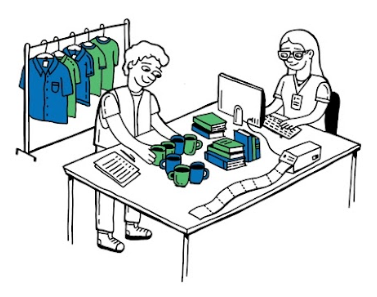
The Unique Economics of Donated Goods Retail (DGR)
To run a successful thrift operation, you have to master a set of economics that would make a traditional retailer’s head spin. In standard retail, your Cost of Goods Sold (COGS) is predictable. In thrift, your “cost” is buried in labor, processing time, and floor space.
The goal of a modern thrift platform is to make these “invisible costs” visible. You aren’t just selling a $5 shirt; you are managing the lifecycle of a donated asset.
- The Processing Paradox: The faster you process, the more you sell. But if you process without data, you’re just moving clutter.
- The Yield Equation: Understanding the “sell-through” of specific categories by location.
- The Rotation Requirement: Unlike a boutique, thrift inventory must rotate on schedule. If it stays on the rack for more than four weeks, it’s costing you money.
When your technology understands these three pillars, the “math” of the store changes. You stop guessing which color tag is on sale this week and start knowing exactly the kind of inventory your floor needs.
| Feature | Traditional Retail | Modern Thrift Retail |
| SKU Variety | Curated and predictable | Unique, with infinite variations |
| Supply Chain | Predetermined sales orders | Variable donated items and quantities |
| Pricing | Static, guided by MSRP | Dynamic and condition-based |
| Inventory Turnover | Seasonal and planned | High velocity, weekly rotations |
The Shift: From Store-Centric to Lifecycle-Centric Operations
For decades, the “store” was the center of the universe. You opened the doors, people brought stuff, and you sold it. But as thrift matures, the focus shifts toward the donation lifecycle.
This is where the pivot happens. Retail is different when you stop treating your software as a cash drawer and start treating it as a lifecycle engine.
- Intake & Grading: Identifying the value of an item the moment it hits the bin.
- Production Tracking: Measuring how many pieces are hitting the floor per hour, per person.
- Multi-Channel Outlets: Knowing which items belong on the floor, which belong in an e-commerce shop, and which should head to salvage.
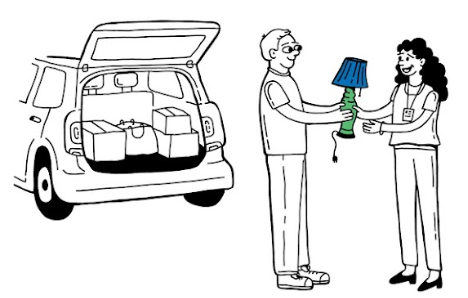
When these stages are working together, a processor’s impact on this business is different. They aren’t just “sorting clothes”; they are fueling a data-driven sales engine. The friction of “Where does this go?” is replaced by the clarity of “This is exactly where this item adds the most value.”
What “Unified Commerce” Means for Secondhand Retail
“Unified Commerce” is a term thrown around in high-end fashion, but it is actually the “Quiet Partner” thrift has been waiting for. In a unified environment, there is no “syncing” between the web and the store. There is no “merging” of the loyalty program and the register.
It is a single source of truth. For thrift, this means:
- Real-Time Visibility: If a high-value item is scanned into the e-commerce queue in the back, it’s accounted for in the organization’s total asset value in real time.
- Cross-Store Insights: Comparing the “yield per donation” at Store A versus Store B without needing a week of data forensic work.
- Frictionless Loyalty: A donor who gives at the drop-off center should be recognized as the same person who shops at the other location across town.
Unified commerce removes the “clutter” of disconnected tools. It allows the technology to keep pace with the people using it.
4 Must-Have Features of a Modern Thrift POS Platform
If you are looking to move from “chaos” to “scale,” your platform needs to handle the specificities of the thrift floor. At Brijj, we don’t just look at features; we look at how the day flows.
1. High-Velocity Production Tools
Thrift happens in the back room. A modern platform must have mobile-first tools for “tag and bag” workflows. If a processor can’t price and tag an item in under 5 seconds, the system could be the bottleneck.
2. Dynamic Pricing Engines
The days of “all shirts are $4” are ending. Systems should provide “good-better-best” frameworks or real-time data on which types of items sell best on popular online marketplaces. Greater product knowledge lets staff capture more value from every donation.
3. Automated Color-Tag Rotations
Managing “Color of the Week” shouldn’t require much manual effort. A unified platform automates the discount logic at the POS and tracks the “pull” rate, telling you exactly when it’s time to move aging inventory to the outlet or salvage.
4. Donor Relationship Management (DRM)
Your donors are your suppliers. A modern thrift POS should treat them with the same care a luxury brand treats its VIPs. Capturing donor data at the point of intake allows for automated tax receipts and “thank you” campaigns that drive repeat donations.
The Result: Confidence, Not Just Data
At the end of the day, we don’t measure success by how many features are available. We measure it by the success of our customers.
When your technology is aligned, the “vibe” of the store changes.
- Staff stay engaged because they aren’t fighting with the hardware.
- Managers stay on the floor because the reporting is in their pocket.
- Customers stay loyal because the checkout is fast and the inventory is fresh.
Thrift is a fast-moving, high-impact industry. It deserves technology that works as hard as the people on the sorting line. It deserves a “Quiet Partner” that provides the clarity to serve your mission at your best.Retail will always move fast. Your technology should move with you.